
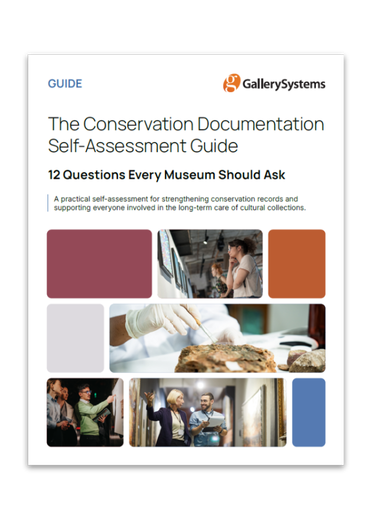
Guide
The Conservation Documentation Self-Assessment Guide
Evaluate your institution's conservation documentation practices with 12 essential questions designed to help identify gaps, strengthen condition and treatment records, and improve how conservation information is managed, shared, and preserved for future collection care.
Strengthen Your Approach to Conservation Documentation
Inside this practical self-assessment guide, you'll discover:
How to assess condition documentation practices
Evaluate how consistently your institution records object conditions, monitors changes over time, and documents examination findings to support informed conservation decisions.
How to improve treatment planning and records
Review how treatment decisions, materials, methods, and outcomes are documented to preserve essential information for future conservation work.
How to organize conservation images and supporting records
Explore ways to organize photographs, annotated images, and technical documentation so they remain accessible, meaningful, and connected to the objects they document.
How to connect conservation information across departments
Assess whether curators, registrars, and collections staff can access the conservation information they need to make informed decisions about loans, exhibitions, handling, and collection care.
How to preserve conservation knowledge for the future
Identify opportunities to strengthen documentation standards, protect historical records, and maintain continuity as staff, technologies, and institutional practices change.
How to turn your assessment into practical improvements
Use a simple scoring system to evaluate your current practices, identify areas for improvement, and establish priorities for strengthening conservation documentation.
Frequently Asked Questions
What is The Conservation Documentation Self-Assessment Guide?
The Conservation Documentation Self-Assessment Guide is a practical resource designed to help museums and cultural institutions evaluate their conservation documentation practices. It includes 12 questions covering condition assessments, treatment records, visual documentation, information sharing, and long-term stewardship.
Who is this conservation documentation self-assessment guide for?
The guide is designed for conservators, collections managers, registrars, curators, and other museum professionals responsible for documenting, managing, or using conservation information.
What will I learn from the guide?
You'll explore four essential areas of conservation documentation: examination and condition assessment, treatment planning and documentation, visual records and connected information, and long-term stewardship. Each section includes questions and prompts to help you evaluate your institution's current practices.
How can this guide help improve our conservation documentation?
The guide provides a structured way to review existing practices and identify potential gaps. Its scoring system helps you recognize areas that may need attention, while the accompanying action-planning section encourages you to prioritize practical improvements.
Do we need an established conservation department to use this guide?
No. The guide can support institutions at different stages of developing their conservation documentation practices, including those working with external conservators or managing conservation information across multiple departments.
Does the guide cover how conservation information is shared across museum departments?
Yes. The guide explores whether conservation records are connected to wider collections information and whether authorized colleagues can access relevant condition reports, treatment histories, and care recommendations when needed.
How does the conservation documentation scoring system work?
The guide uses a simple scoring system to help you assess how consistently your institution follows recommended documentation practices. Once completed, you can review your results across four key areas, identify potential gaps, and prioritize practical improvements to strengthen your conservation documentation.
Connect Conservation Knowledge Across Your Institution
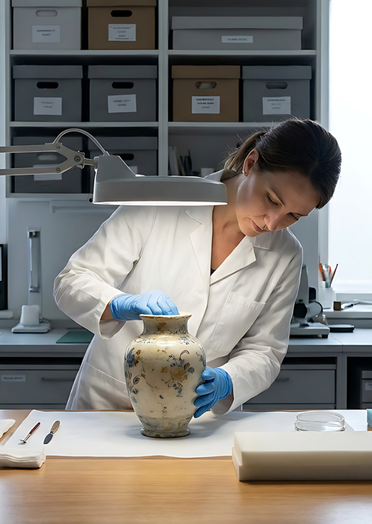
Effective conservation documentation goes beyond recording treatments and condition assessments. It means ensuring that valuable conservation knowledge remains accessible and available to support informed decisions throughout an object's lifetime.
TMS Conservation Studio, part of the TMS Suite, helps museums manage condition and treatment documentation, conservation projects, and image annotations in connection with their wider collections records. By bringing conservation information together, institutions can support collaboration and a more connected approach to long-term collection care.